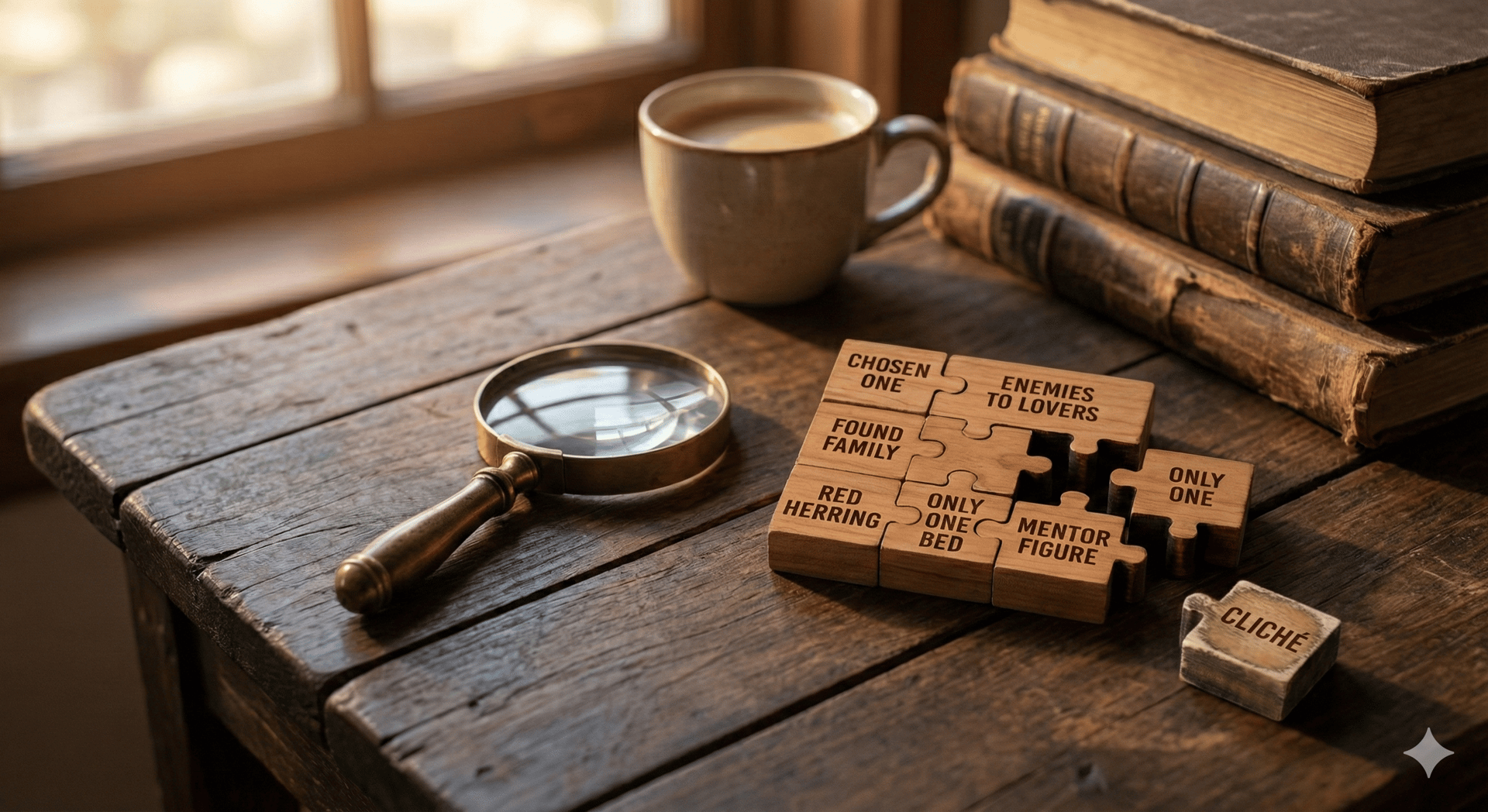
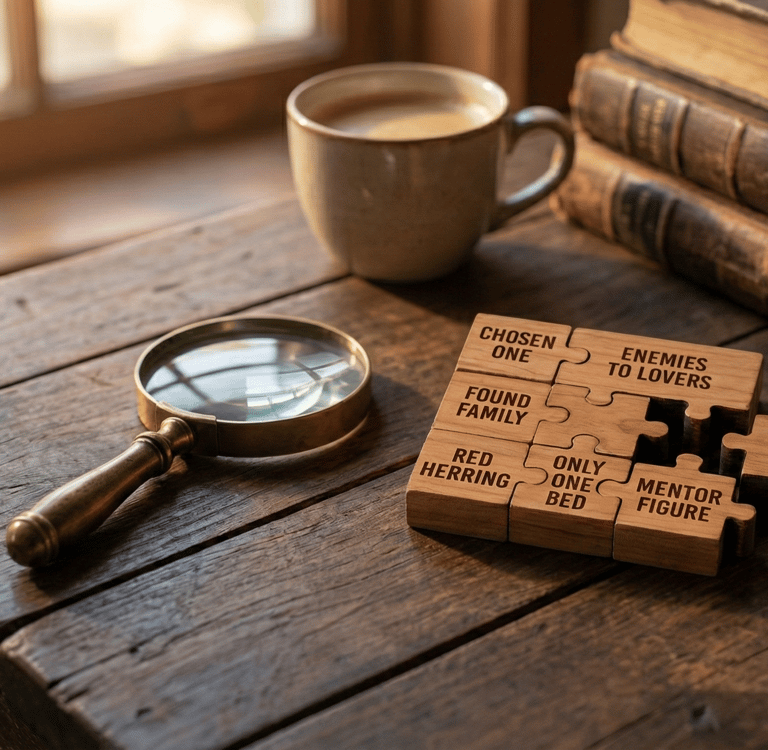
Tropes were introduced to me when I took a deep dive into querying shortly after completing my first novel. I’m not going to lie, at that time I had no idea which were applicable to my writing, or even definitively what they were. As always Google saved the day and left me wondering how I had gotten to such a point in my life completely clueless of something that now seems so commonplace.
Simply put, a trope is a theme, a concept, and a pattern that informs readers what to expect. Like a super condensed blurb using only descriptive keywords.
Every genre leans on familiar tropes that help readers quickly understand the kind of story they’re stepping into. In romance, one of the most popular examples is enemies to lovers. As the trope suggests, the love interests begin at odds - sometimes openly hostile - before their conflict slowly gives way to attraction and emotional connection.
Fantasy often embraces the chosen one trope, where the hero’s role has been foretold through prophecy, legend, or ancient lore. This device instantly raises the stakes, signaling that the character’s journey is larger than themselves.
Crime fiction has its own recognizable patterns, including the red herring, which deliberately misleads readers, and the lone detective, whose isolation often mirrors the moral complexity of the case.
While tropes are frequently discussed by genre, they can also be grouped more broadly into worldbuilding tropes, character tropes, and plot tropes. Understanding how these elements function allows writers to either lean into readers’ expectations or subvert them in fresh, compelling ways.
If you’ve spent any time in writing spaces, you’ve probably heard someone groan, “Ugh, that story is so tropey.” As if tropes are some kind of literary junk food - guilty pleasures we should all pretend we don’t enjoy. But here’s the truth: tropes aren’t the enemy. In fact, without them, storytelling would be absolute chaos.
Tropes are the shortcuts of fiction. They tell readers what kind of ride they’re about to get. When someone picks up a romance novel and sees enemies to lovers, they know there will be banter, tension, and at least one scene where the characters insist they “definitely do not like each other” while clearly liking each other. That’s not lazy writing, that’s a promise. Reader’s love knowing what emotional payoff they’re signing up for.
Think of tropes like pizza toppings. Cheese is a trope. Pepperoni is a trope. No one orders a pizza and complains that it contains bread. They complain if it’s poorly made. The same goes for stories. A chosen one prophecy isn’t boring because it exists; it’s boring if the hero has the personality of a damp sock.
Tropes also help writers get out of their own way. Staring at a blank page is terrifying. Starting with a familiar framework like a small town with secrets, a lone detective, or a ragtag group of misfits gives you something solid to build on. From there, you can twist it, subvert it, or play it completely straight with extra flair.
And let’s be honest: readers seek out tropes on purpose. They don’t search for “a vague emotional experience with unclear outcomes.” They search for found family, slow burn, and there was only one bed. Tropes are how readers find stories that make them feel exactly the way they want to feel.
A little online digging revealed that there is some confusion between a trope and a cliché, and I can understand why.
Tropes and clichés get lumped together a lot, but they’re not the same thing, and understanding the difference can save your story from some unfair side-eye.
A trope is a recognizable storytelling pattern. It’s a tool. The chosen one, found family, the mentor who dies - these are broad frameworks that give shape to a story. Tropes are flexible. They can be played straight, subverted, blended, or reinvented. Most importantly, tropes still leave room for originality, voice, and surprise.
A cliché, on the other hand, is what happens when a trope stops trying. It’s a trope that’s been used so often, and so predictably, that it no longer feels fresh or meaningful. Think of the villain who monologues instead of acting, or the love interest who trips solely so the hero can catch them. Clichés don’t add depth; they feel automatic, like the story is running on autopilot.
The key difference is execution. Tropes are neutral. They become clichés only when they’re used without intention, nuance, or a unique spin. A grumpy mentor can be compelling if they have a distinct worldview and emotional weight. They become a cliché if they exist only to dispense vague wisdom and die on schedule.
Readers don’t get tired of tropes; they get tired of seeing the same version of a trope repeated with no variation. That’s why a familiar setup can still feel fresh in one book and painfully obvious in another.
In short: tropes are the building blocks of storytelling. Clichés are worn-out shortcuts. Using tropes thoughtfully works. Using them carelessly results in unwanted predictability. They don’t ruin fiction. They’re the reason fiction works. They’re the familiar beats that let us focus on what really matters - voice, character, and heart. Use them boldly, break them when it serves the story, and never apologize for writing the thing readers secretly (or not so secretly) love.
© 2026. All rights reserved.