Faith, Power, And the Female Protagonist
When Fiction Becomes a Much Needed Rebellion
3 min read
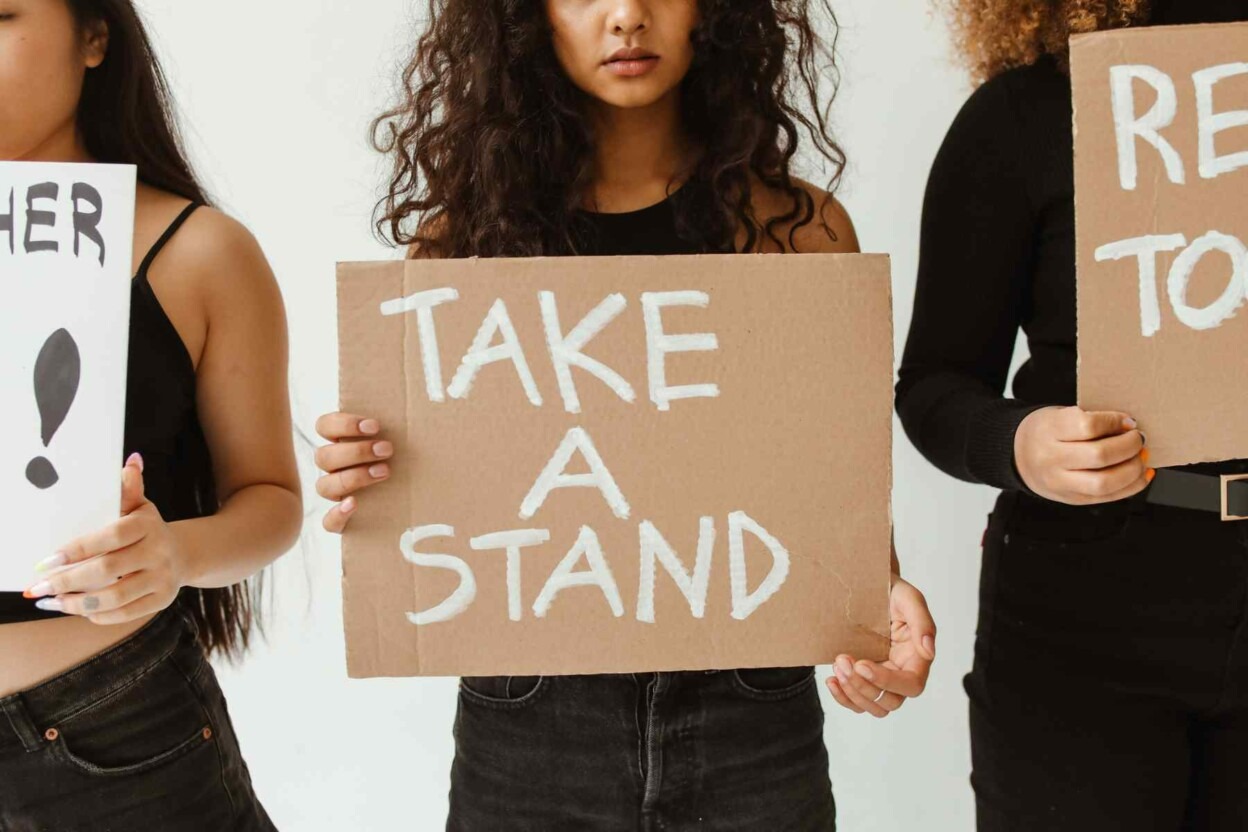
My first novel, From the Other Side, challenged what lies at the common core of many belief systems. It also left me questioning why I found the subject matter so beautifully enticing. I’m not a hater of religion, but I definitely sit on the fence when it comes to the ideals and values of certain denominations. I am uncommitted — and I’m okay with that.
What I will say is that the guilt cast by many religions upon the living is not something I am at peace with.
Do I think that actions should carry consequences…. absolutely. But the notion of a higher power judging humanity by a man-written rulebook that advantages some while subjugating others isn’t divine justice — it’s hypocrisy.
Religion frequently acts as an agent of social control by providing a framework for what is considered acceptable behavior. By influencing values related to family, marriage, and daily life, religious institutions help maintain social stability and cohesion. Which would be all well and good if done without prejudice to half of society. If some are “more equal than others,” guess what….that’s not fucking equality.
The evolution of perspective is rarely slower than within religious circles. For years, social and religious systems — even in supposedly progressive Western societies — remained rooted in archaic beliefs and practices where the female of the species carried an entirely different set of expectations than her male counterpart.
Find me a teaching where the complementarian role of the woman is not inferior to the male. Society has progressed but in many ways such progression has been to the detriment of women. Now we can go get any job that we want (let us skim over the blatantly obvious additional hurdles we are forced to leap for daring to have a vagina) we can choose a career over a family and almost be allowed to make decisions for ourselves. But in doing so, for the majority of us, our traditional role of primary caregiver, house keeper and organization oracle still remain.
How many men truly split the responsibilities of home life equally with their partner? Often without realizing it most women continue to bear the burden of simultaneously running a household with a career. Rarely is it acknowledged that they become the default parent, cleaner and therapist. It is automatically assumed that their brain holds a constantly updated spreadsheet of information that ranges from their offspring’s extracurricular and school schedules, shoe size and teacher’s name, to the cooking instructions for every food type known to man, cleaning hacks, first aid and infection control practices, pantry replenishment cycles and home essential stock rotations. And let’s not forget the constant reminder to #selfcare…..which somehow becomes yet another task to add to an already endless list.
All of that is before we even attempt to pick at the ugly scab of digression that has occurred at an alarming rate in recent years. Don’t worry — I’m not quite stupid enough to throw myself into the torture chamber of political debate. I’m simply pointing out that women throughout history have almost always drawn the short straw, and “improvements” are often little more than an expanded workload under the guise of equality.
The fight for equality has been an arduous climb up a hunger games style mountain. And just when there appeared to be a flicker of light within the tunnel of despair society lurched backwards at speeds that rivalled a phallic shaped rocket launch.
No one really wants to believe that death is truly the end. Not for the loved ones that passed before them and certainly not for themselves. Having faith in something beyond the science of death is a psychological mechanism which allows individuals to find comfort in the belief of a higher power, helping to mitigate stress and uncertainty. Despite sitting on the fence I’m all for that. I hope that there is something beyond our limited life on Earth but the only way to know with certainty is…well….to die.
Creating a world free from the burdens of social and religious shame — a world that allowed redemption without subjugation — was both thrilling and therapeutic. Giving my female protagonist power and demanding she embrace her flaws instead of shrinking from them, empowered me at a time when I felt profoundly disempowered.
Dismantling our fractured system was beyond my capabilities. But I could build a world where it no longer held power.
And it gave me more than a sense of accomplishment.
It gave me the kick I needed to rewrite my own ending.
© 2026. All rights reserved.