One of the most common pieces of writing advice you’ll hear is “give your characters depth.” Helpful, right? That’s like telling someone to “make it good” and then walking away. Depth sounds abstract and intimidating, but it doesn’t require a 40-page character questionnaire or a tragic backstory involving dead parents, a burning village, and a scar that “still aches when it rains.”
Character depth isn’t about piling on suffering. It’s about making your characters feel like real people - people who want things, avoid things, contradict themselves, and occasionally make choices you want to yell at them for.
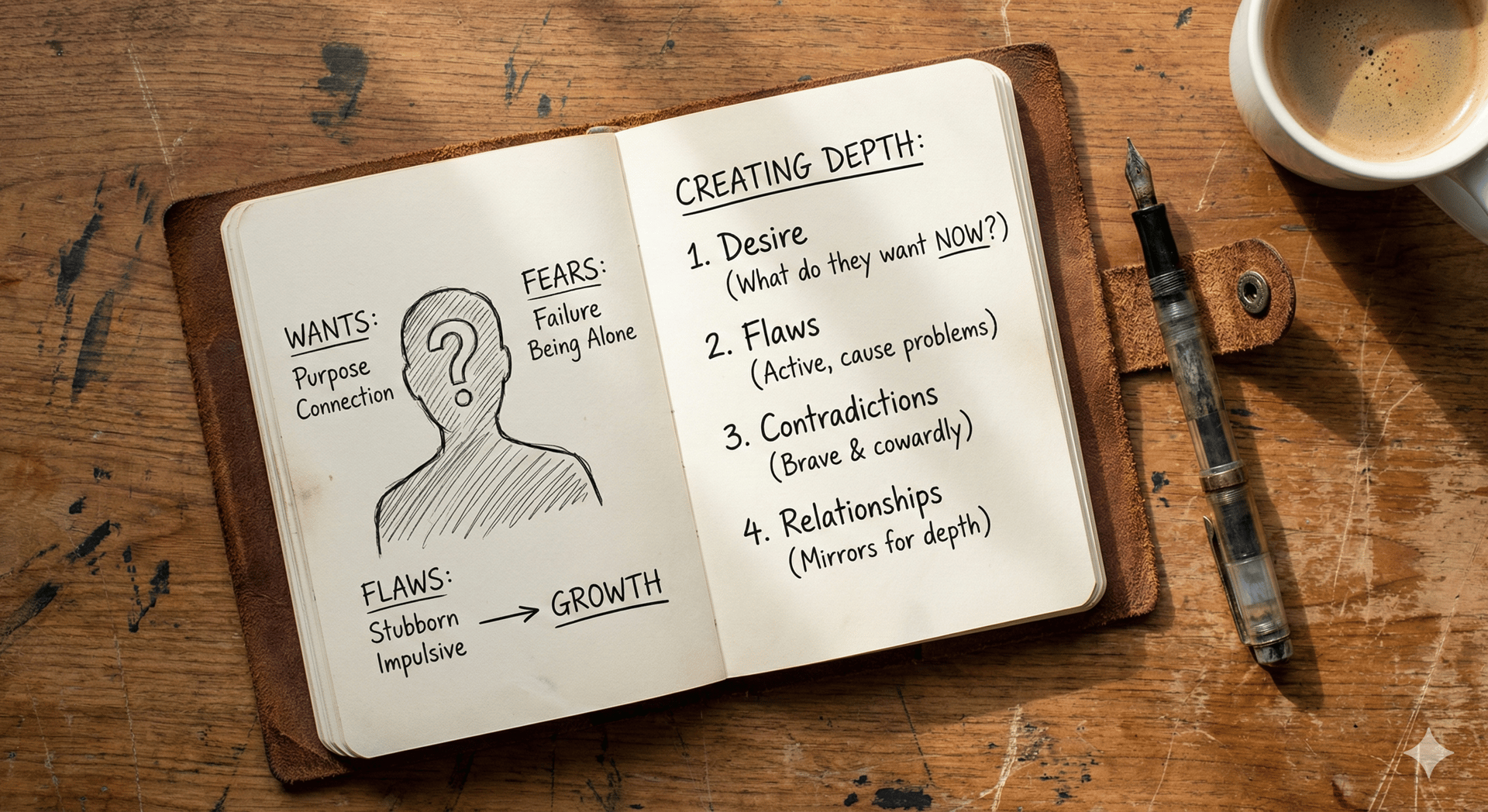
Depth starts with desire, not trauma. Every character should want something. Not vaguely, not eventually, right now (like my desire to purchase overpriced perfumes that I don’t want…I need!). Desire is what gets characters out of bed and into trouble. It can be big (justice, freedom, revenge) or small (approval, safety, a quiet life where no one asks questions). The size doesn’t matter. The clarity does.
A character who wants nothing is a character who does nothing, and a character who does nothing is basically a plant pot with dialogue. Even passive characters are choosing passivity because it protects something they care about. Figure out what your character is protecting, and you’ve already added a layer of depth.
Flaws make characters interesting, and admittedly on occasion, annoying. Perfect characters are comforting in theory and unbearable in practice. Flaws are where depth lives. Not quirks like “clumsy” or “likes coffee too much,” but traits that actively cause problems. Stubbornness. Avoidance. Pride. The inability to ask for help even when everything is on fire.
The trick is to let flaws matter. A flaw should complicate the plot, strain relationships, or delay the resolution. If your character’s flaw never costs them anything, it’s just decorative.
Also, flaws don’t disappear overnight. Growth is messy. Characters backslide. They learn a lesson and then immediately ignore it because of feelings. This is not bad writing; it’s realism.
Believe it or not contradictions are your best friend in this particular scenario. Real people are walking contradictions. We’re brave in some situations and cowards in others. We give great advice we never follow. We want independence and reassurance, honesty and comfort, change and stability - often all at once.
Let your characters contradict themselves. Let the tough character secretly crave softness. Let the kind character harbor resentment. Let the logical character make an emotional decision and then justify it later like a professional adult. Contradictions create tension inside a character, and internal tension is depth.
Remember that a backstory should explain, not excuse. Backstory is seasoning, not the main dish. Its job is to explain why a character is the way they are, not to excuse every bad decision they make.
A traumatic past can inform behavior, but it shouldn’t freeze a character in place forever unless that stagnation is the point of the story. Readers want to see characters respond to their past, even if that response is unhealthy, self-destructive, or wildly misguided.
And please remember that not every character needs a tragic origin story. Some people are just difficult because they’ve always been that way. Terrifying, but true.
Relationships reveal depth faster than monologues. You can tell readers a character is loyal, or you can show them standing by someone when it costs them dearly. You can say a character is emotionally guarded, or you can show how they deflect, joke, or change the subject whenever things get real.
Relationships are mirrors. How a character behaves with different people - friends, enemies, family, love interests - reveal layers naturally. The person they are alone is not the same person they are when someone else can hurt them.
If you want to deepen a character, put them in a relationship that challenges their self-image. Then sit back and watch the sparks.
Let characters make bad choices, yes on purpose. Depth doesn’t come from always choosing the “right” option. It comes from choosing the option that feels right to them in that moment, even if it’s objectively terrible.
Characters should act based on their fears, desires, and flawed logic. When they mess up, it should make sense in hindsight. Readers may disagree with the decision, but they should understand it. If every choice is optimal, your character feels less like a person and more like a strategy guide. Voice matters more than you think.
Depth isn’t just what a character does, it’s how they think. Two characters can experience the same event and interpret it completely differently. Voice shapes perception.
Pay attention to what your character notices, what they ignore, and how they frame their experiences. Are they cynical? Hopeful? Defensive? Self-deprecating? The internal commentary is where depth quietly lives.
Finally, depth doesn’t mean complexity for complexity’s sake. A character doesn’t need twelve secrets and three personality shifts per chapter. What they need is internal consistency, a clear emotional logic that guides their actions, even when those actions change.
When readers understand why a character behaves the way they do, they’ll forgive almost anything. Even the bad decisions. Especially the bad decisions.
Give your characters wants, flaws, contradictions, and relationships that matter. Let them struggle, grow slowly, and occasionally trip over their own issues. Do that, and your characters won’t just exist on the page, they’ll linger in your readers’ minds, arguing with them long after the book is closed.
© 2026. All rights reserved.