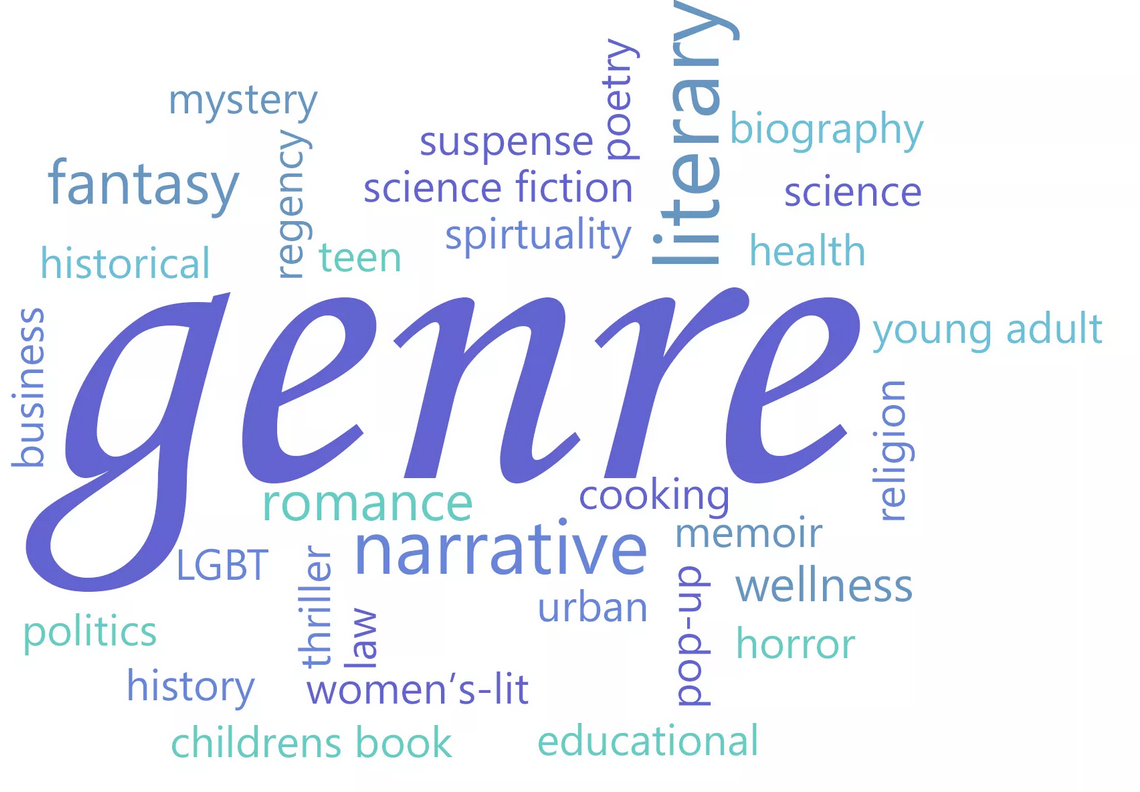
Finding your genre is a little like dating, or so I’m told.
At first, you think you know exactly what you want. Tall, dark, and emotionally unavailable. Or perhaps soppy romance, slow burns, and happily-ever-afters. You grab a pen….or more likely your laptop, gear those fingers up for typing and with an air of delusional confidence tell yourself, “Yes. I am clearly a fantasy writer.” Three chapters later you’re knee-deep in political world-building, inventing currencies, and Googling whether moons can realistically have three shadows. And just like that the tendrils of doubt weave their way in leaving you to question your most recent life choices.
If there’s one thing I’ve learned on this mildly chaotic writing journey, it’s that genre isn’t something you choose once and tattoo on your forehead. (If my daughter is reading this, that is most definitely a metaphor and facial tattoos will not be well received) It’s something you discover—usually after a few wrong turns, mild identity crises, and at least one “What the hell did I just write?” moment.
So how do you figure out which genre actually suits you and your writing style?
Firstly, look at what you read when no one is watching.
Not what you think you should read. Not what’s trending on TikTok. Not what your highly intellectual friend insists is “transformative.” What do you gravitate toward at 10 p.m. when you’re tired, unfiltered, and just want to sink into something?
If your shelves are stacked with morally gray villains and slow-burn tension, that’s not an accident. If you consistently reach for small-town romances or twisty psychological thrillers, your subconscious is waving a large neon sign.
We tend to write the stories we crave. Actually scrap that. We tend to excel at writing the stories we crave. That doesn’t mean you can only write what you read, but there’s usually a reason certain genres feel like home. They align with your natural rhythm—your pacing instincts, your tolerance for exposition, your appetite for emotional intensity.
Secondly, examine how you tell stories—even the mundane ones.
Are you the friend who recounts a trip to Target like it was a life-or-death mission? (which admittedly sometimes it is) Congratulations, you may have thriller tendencies. Do you embellish everything with witty banter and romantic tension? Romance might be your thing. If you’re prone to fall into a deep philosophical analysis about the meaning of life after a slightly inconvenient parking situation, literary fiction could be whispering your name.
Your natural storytelling voice matters. Some writers thrive in high-concept, plot-heavy environments. Others excel at introspection and character nuance. Some are chaos gremlins who gleefully combine dragons, trauma, and sarcasm into one manuscript. None of these are wrong. They just point you in different directions.
And if that hasn’t convinced you, take a moment to consider your comfort level with certain types of content.
When I wrote about controversial elements in my own work—violence, explicit scenes, questioning belief systems—I had to confront whether I was willing to stand by those choices. And whether I would be comfortable defending them.
Genre isn’t just about aesthetics. It’s about emotional and thematic commitment. If you blush while writing a kissing scene and feel the urge to apologize to your laptop, perhaps spicy romance isn’t your calling. If you hesitate to hurt your characters, fantasy epics filled with war and betrayal might drain you.
On the flip side, if you gleefully throw obstacles at your protagonists and cackle while doing so, darker genres might suit your temperament beautifully. You have to be honest about what you’re willing to explore. Because whatever genre you choose, you’ll be living there for months—possibly years. If you’re forcing yourself into a space that feels uncomfortable or inauthentic, it will show.
Never be afraid to experiment. Boldly, recklessly and with snacks (and maybe wine) One of the most valuable things you can do is write outside your assumed lane. Try a short horror story. Draft a romantic subplot. Write a crime scene. Attempt speculative fiction. You may confirm your suspicions—or you may surprise yourself.
There is no rule that says your first completed manuscript must define you forever. In fact, it probably shouldn’t. When you try new genres, you learn what excites you and what exhausts you. You discover whether you love world-building or secretly despise inventing geography. (Side note: if you’re using real places, please double-check your mountain descriptions. Someone, somewhere, will notice)
Genre discovery is as much about elimination as it is about attraction. It is of course important to listen to feedback—but don’t let it hijack you. If multiple critique partners say, “Your dialogue sparkles, but the action scenes feel forced,” that’s information. If readers consistently comment on your emotional depth, that’s a clue. Patterns matter.
However, don’t pivot your entire creative identity because one person says your fantasy needs more dragons or your romance needs fewer feelings. Feedback is guidance, not gospel. Ultimately, the genre that suits you will feel sustainable. You’ll still struggle—writing is rarely easy—but the struggle will feel purposeful rather than soul-sucking.
Genre identification is important to a certain degree, but we live in an era of mashups. Romantic fantasy. Paranormal thriller. Dark comedy crime. The lines are blurrier than ever. Therefore, if you can’t seem to fit neatly into one category, that might be because you’re not meant to. Some writers are happiest in the gray areas, weaving elements from multiple genres into something uniquely theirs.
The key is understanding the core promise you’re making to the reader. Romance promises emotional payoff. Mystery promises answers. Fantasy promises immersion in another world. Thriller promises tension.
Finally—and perhaps most importantly—ask yourself this: Which stories won’t leave you alone?
The genre that suits you is often the one that nags at you throughout your day. The one that interrupts your shower with plot twists. The one that keeps you awake at night whispering, “What if…?” If you have to drag yourself to the page, that’s a sign worth examining. If you find yourself scribbling ideas on receipts, that’s another.
You’re going to spend a lot of time in this world you create. You’re going to defend it, edit it, doubt it, and rewrite it at least seventeen times. Choose a genre that makes you excited to return, even after the rejections, the critiques, and the occasional existential crisis.
And if you choose wrong the first time?
Welcome to the club. Pivot. Adjust. Write something else. After all, is rarely a straight line. But when you find the right fit, you’ll know. It won’t feel forced. It will feel like home.
© 2026. All rights reserved.